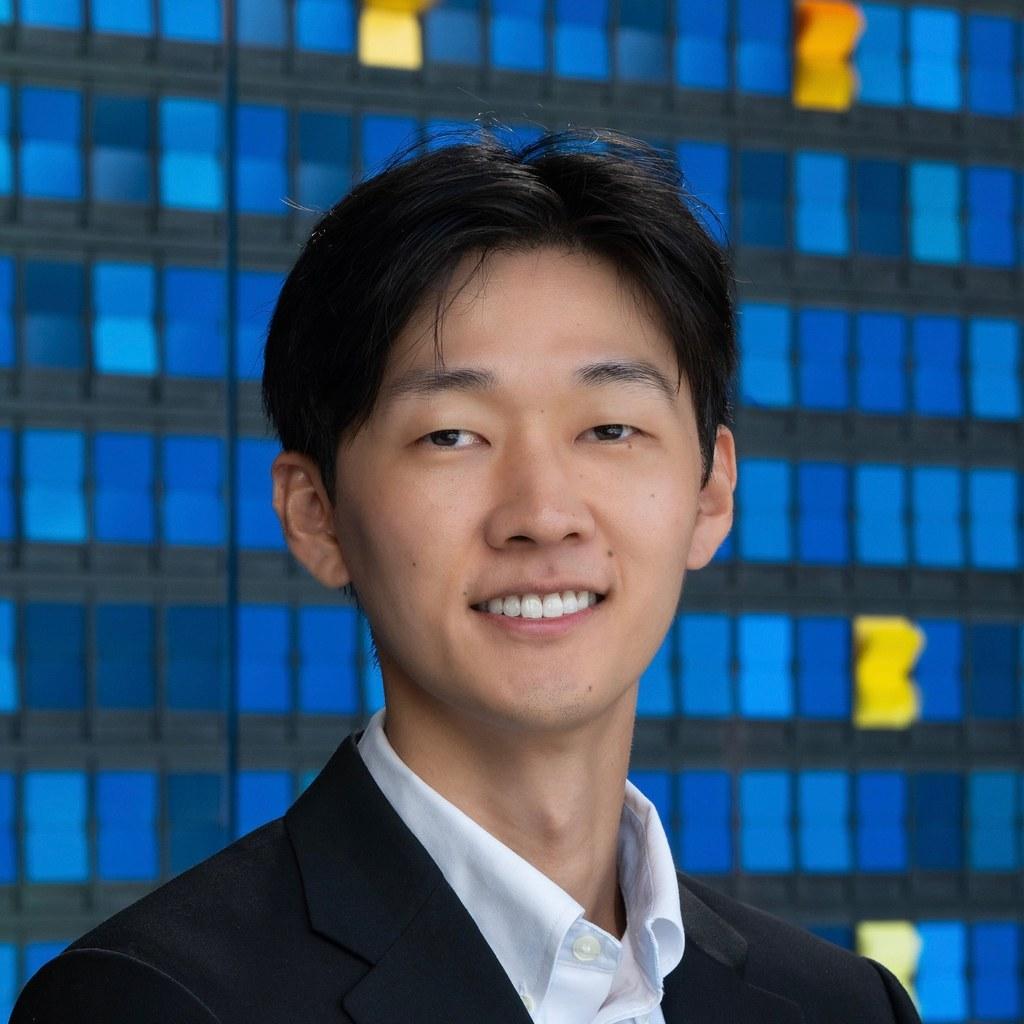
Joshua Woo

Joshua Woo

Portrait of Joshua Woo
BA in Computer Science, class of 2023
Brown University
MD, class of 2029
Warren Alpert Medical School of Brown University
MBA, class of 2028
Stanford Graduate School of Business

About

I am a 4th year medical student at Brown University, where I also majored in Computer Science as part of the Program in Liberal Medical Education (PLME) BS/MD. Currently, I'm completing my MBA at Stanford before returning to finish my MD. My main area of interest is artificial intelligence within pre/intra/post operative surgical care. As a researcher, I have spent the past 6 years specializing in computer vision and machine learning to phenotype anatomy.

Work

How soon should a torn ACL be reconstructed, and with which graft?

From memory

ACL tears are common knee injuries, and the right treatment depends on the patient. Surgery is often recommended for active people, and several graft options exist. Timing and graft choice should be discussed with a surgeon.

With retrieval

For an acute isolated ACL tear that needs surgery, early reconstruction is preferred: the risk of further cartilage and meniscal injury starts to rise within 3 months [1]. Surgeons should consider autograft over allograft to improve outcomes and lower graft failure, particularly in young or active patients [2]. Both are strong recommendations [1] [2].

Animated example: a clinician asks a question of a de-identified table of knee scans (knee_scans.csv), and an AI agent answers it with vetted analysis tools.

Question: Which measurements best separate the outlier knees?

The agent runs four tools:

  1. summarise(cohort): 1,352 scans, 27 measurements
  2. compare(groups: outlier): 27 tests, corrected for multiple comparisons
  3. fit(random forest, 5-fold): model trained
  4. plot(importance): chart ready
Illustrative output. Bar chart of the measurements that best separate outlier knees, ranked by relative importance, most important first. Bar lengths are illustrative and carry no values.
  1. Hip rotation
  2. Posterior tibial slope
  3. Hip-knee-ankle angle
  4. Tibiofemoral angle
  5. Medial proximal tibial angle
  6. Lateral distal femoral angle

Summary: Six measurements carry most of the difference between typical and outlier knees. Only summaries like this chart reach the language model; individual patient rows never do.

Ongoing

Phenotyping hip impingement

Some hips grow a small bump of extra bone where the ball meets the neck of the femur. It catches on the socket every time the hip bends, and over years it wears the joint down. Surgeons have sized that bump with a single angle on a flat X-ray.

We measure the whole thing in three dimensions from CT: how much bone, how deep and where. Across 831 hips the bumps fell into three shapes, which we named Hillock, Hill and Mountain, each needing a different amount of bone removed.

  • Hillock: 40% of hips. Shallow, proximal, focal. 2.1 mm deep, 189 mm² footprint.
  • Hill: 47% of hips. Broad and voluminous. 2.4 mm deep, 468 mm² footprint.
  • Mountain: 13% of hips. Tall, distal, focal. 4.3 mm deep, 163 mm² footprint.

Published

Knee arthroplasty anatomic outliers

Between 15 and 30 percent of people are unhappy with their knee replacement. One reason may be that the operation is planned around a typical knee, and many knees are not typical.

We ran 1,352 pre-operative CT scans through an automated pipeline that takes 27 measurements from hip to ankle. Roughly one patient in three sat at the extremes on nine or more of them. Some of the most overlooked are rotational, such as femoral version (how far the top of the femur is twisted relative to the knee).

Four knee types, by femoral version

  • Type 1, outlier, 18.5% of knees: 14° femoral version. Valgus, steeper tibial slope.
  • Type 3, outlier, 7.5% of knees: 5° femoral version. Varus, flat tibial slope.
  • Type 2, wild type, 39.6% of knees: 11° femoral version. Larger bones.
  • Type 4, wild type, 34.5% of knees: 12° femoral version. Smaller bones.

Published

Retrieval-augmented generation

When ChatGPT first came out, one of its clearest deficiencies was in citing accurate information. For medical guidelines, this was a crucial gulf to traverse.

Retrieval-augmented generation makes the model look things up first. It pulls the relevant passages from a library you trust, writes its answer from those, and marks each claim with the source it came from, so a clinician can check the answer instead of taking it on faith. We applied it in orthopedics, to the guidelines for ACL injuries.

Published

Agentic data science tools

Clinicians know which questions are worth asking of their data. Few have the time to write the code that answers them.

ChatDA is an AI agent that analyses a clinical spreadsheet in conversation. You ask in plain English; it chooses the test, fits the model and draws the figure using a fixed set of vetted tools. We designed this with an emphasis on privacy, protecting individual rows from being inputted.

Experience

  • Hip Massif

    Co-Founder

    2026 to present

  • Commons Clinic

    Chief Data Scientist

    2021 to present

  • Best in Class MD

    Data Scientist

    2024 to 2026

  • Hospital for Special Surgery

    Medical Student Research Fellow

    Summer 2024

Education

  • Stanford Graduate School of Business

    MBA

    Class of 2028

  • Warren Alpert Medical School of Brown University

    MD

    Class of 2029

  • Brown University

    BA in Computer Science

    Class of 2023